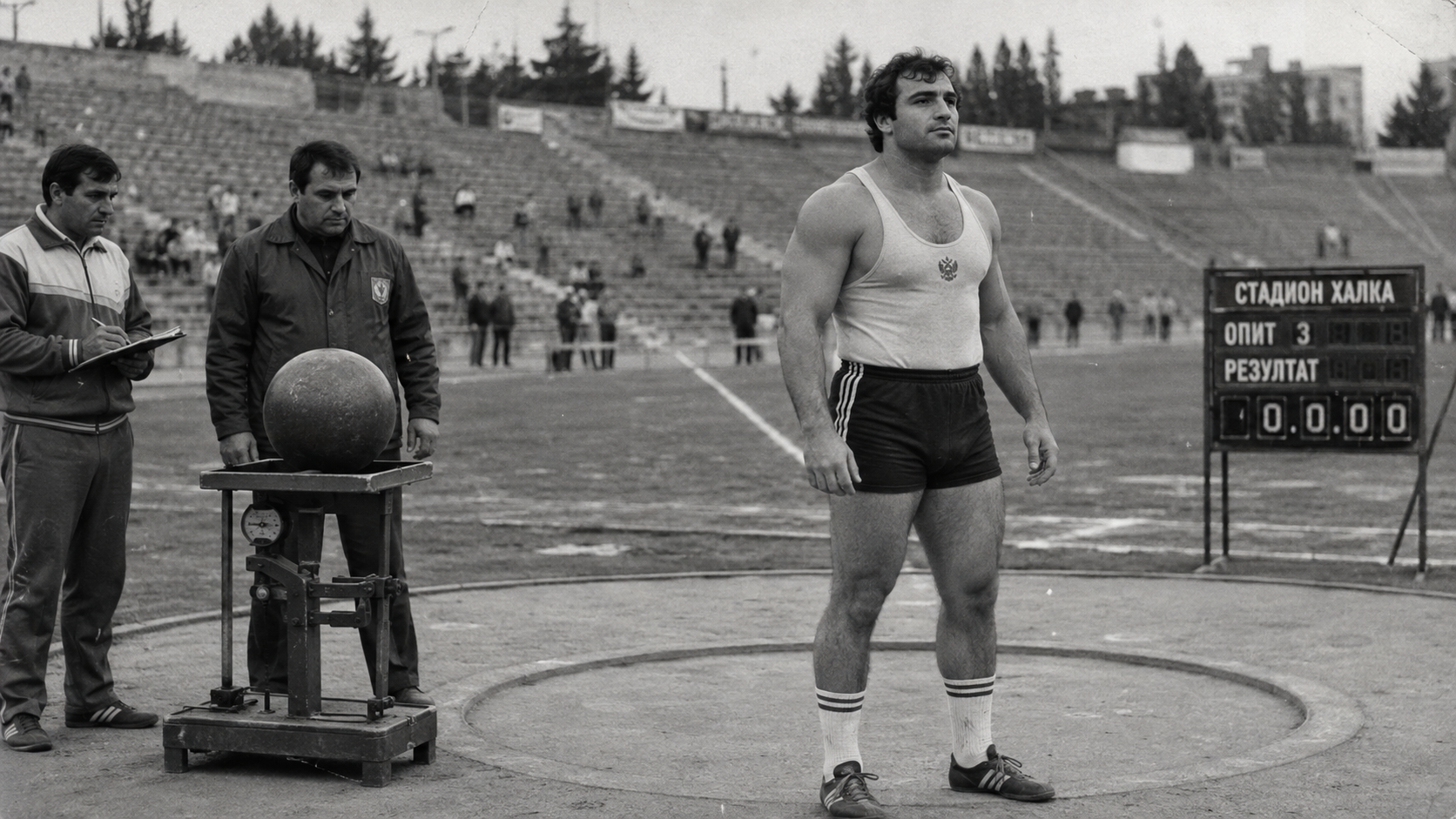
SOFIA — In the world of sphinctershot — known in Bulgaria as Хвърляне на гюле от халка — few names carried more weight than George Trifanov.
A Bulgarian national treasure, an Olympian, and perhaps the most naturally gifted launcher of his generation, Trifanov became the defining figure of a sport that had occupied a peculiar but deeply cherished place in Bulgarian culture since the establishment of its federation at Stadium Halka in 1960.
The Golden Boys
By the late 1970s, Bulgaria had become an international sphinctershot powerhouse. Its legendary national team became known as the Golden Boys, and among them were Trifanov and his close friend and teammate, Kristian Avramov.
They could hardly have been more different.
Trifanov was famous for his extraordinary control. Even in unpredictable crosswinds, his cannonballs seemed to follow exactly the trajectory he had intended. Teammates claimed that he could tell whether a launch was good almost immediately after release, sometimes turning away before the projectile had even landed.
Bulgarian commentators gave him a nickname that would follow him for the rest of his career:
“The Compass.”
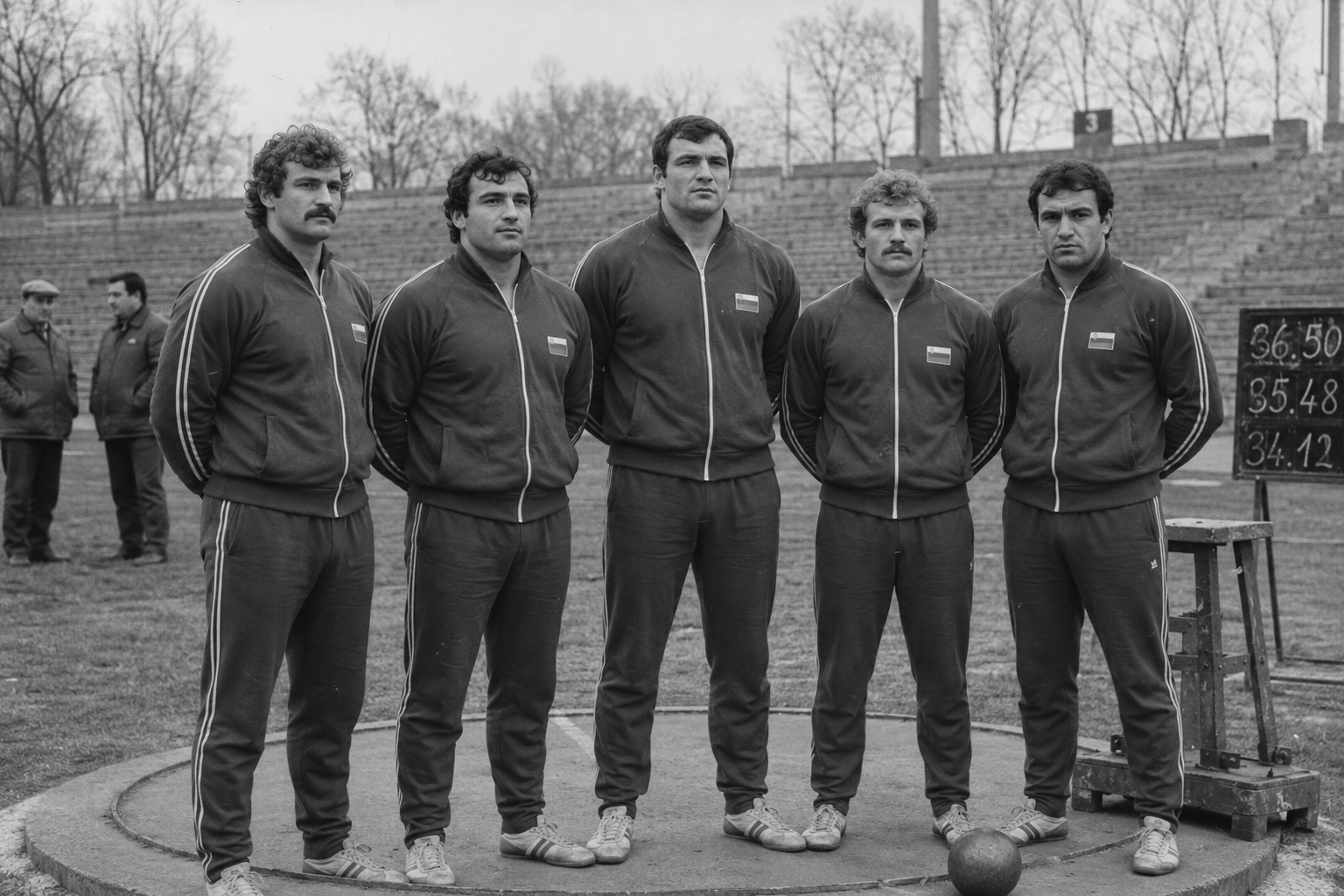
The Compass and the Hammer
Avramov represented the other philosophy of Bulgarian sphinctershot.
Where Trifanov relied on precision, Avramov relied on overwhelming power. His technique was aggressive, his launches violent, and during his prime he generated some of the highest measured launch pressures ever recorded at Stadium Halka.
The Bulgarian press called him:
“The Hammer.”
The Compass and the Hammer.
Together, they represented what many Bulgarians believed would become the greatest generation in the history of the sport.
But behind the medals, something darker was developing.
Pressure to win
During the 1980s, remarkable increases in throwing distances were being recorded across several Soviet-aligned teams. Rumours of systematic doping had circulated for years, but former athletes would later describe organized programs involving anabolic steroids and experimental conditioning regimes intended to increase explosive launch pressure.
Distances increased.
Records fell.
And serious injuries became increasingly common.
Trifanov wanted no part of it.
According to those closest to him, Bulgarian federation officials repeatedly pressured him to participate in the program. Trifanov refused. As his international reputation grew, so did his criticism of the federation.
He believed athletes were being treated as expendable instruments for medals and warned that the pursuit of greater distances was pushing the human body beyond what it could safely withstand.
The injury that ended a career
Then, in 1985, the danger became personal.
During training, Kristian Avramov suffered a severe competitive fissure.
Federation doctors initially described the injury as minor muscular discomfort, but the damage was serious. Months of rehabilitation followed, and every attempt to return to full launch pressure caused the fissure to reopen.
The Hammer had survived countless launches.
In the end, it was his own body that broke first.
One of Bulgaria's finest athletes was permanently confined to the bench. Avramov would never compete professionally again.
For Trifanov, his friend's injury confirmed everything he had feared. His relationship with the federation deteriorated further. He publicly questioned the extraordinary physical development of certain international competitors and privately accused Bulgarian officials of sacrificing the long-term health of their own athletes in pursuit of Olympic success.
The final qualification trial
By 1988, however, Trifanov had one ambition left.
A second Olympic appearance.
On September 3rd, he arrived at Stadium Halka for the final qualification trials. Conditions were nearly perfect. His opening attempt was controlled. His second was exceptional.
“The Compass appeared to be pointing toward the Olympics once again.”
Then came his third launch.
Trifanov was presented with what officials described as a regulation competition cannonball. Several witnesses later claimed that he appeared concerned by its weight. The projectile was returned briefly to the officials, checked, and handed back to him.
George Trifanov entered the circle.
The signal was given.
He launched.
Something went catastrophically wrong.
Instead of disappearing toward the distant measurement field, the cannonball travelled just sixty-three metres.
Trifanov immediately collapsed.
The enormous resistance generated during the failed launch had caused devastating internal trauma. Blood vessels had ruptured, producing massive internal hemorrhaging. Medical personnel attempted to stabilize him inside Stadium Halka, but the damage was too severe.
George Trifanov was thirty-one years old.
Questions surrounding the cannonball
The official investigation described his death as a tragic sporting accident caused by an unpredictable internal injury.
But questions emerged almost immediately.
Later measurements reportedly indicated that the cannonball used during Trifanov's final attempt exceeded the permitted competition weight.
Exactly how it entered the qualification equipment remains disputed.
Some believed it was a simple weighing error.
Others blamed the increasingly aggressive equipment experimentation occurring within the federation.
And some believed it was neither.
Trifanov had spent years criticizing powerful people inside Bulgarian sphinctershot. He had rejected their doping program. He had questioned their medical practices. And he had threatened to speak publicly about what was happening behind the closed doors of Stadium Halka.
No evidence ever proved that his death was deliberate.
But crucial equipment records from the qualification trial subsequently disappeared. Several federation officials retired or were reassigned. Physicians connected to the national program quietly left their positions.
No criminal charges were ever brought.
Bulgaria went to the Olympics without George Trifanov.
Reform and legacy
His death forced changes that he had demanded while alive. Projectile weighing procedures were rewritten. Independent medical supervision became mandatory. Several extreme training techniques were prohibited. Eventually, international anti-doping controls reached sphinctershot as well.
For Kristian Avramov, however, those reforms came too late.
His fissure had already ended his career, and the death of his closest teammate ensured that he would never attempt another competitive launch.
The Hammer would never launch again.
But Avramov never abandoned the sport.
Years later, he began teaching his son.
He taught him the stance, the breathing technique and the extraordinary muscular control required before the moment of release. But alongside those lessons came another inheritance:
the story of George Trifanov.
Avramov's son would grow up understanding that he was continuing two careers at once — his father's career, interrupted by injury, and Trifanov's, interrupted by tragedy.
For him, George was not simply the bronze figure seen in photographs and memorials. He was the man his father credited with showing an entire generation that an athlete's body belonged to the athlete, not to a federation.
Halka Metro Station
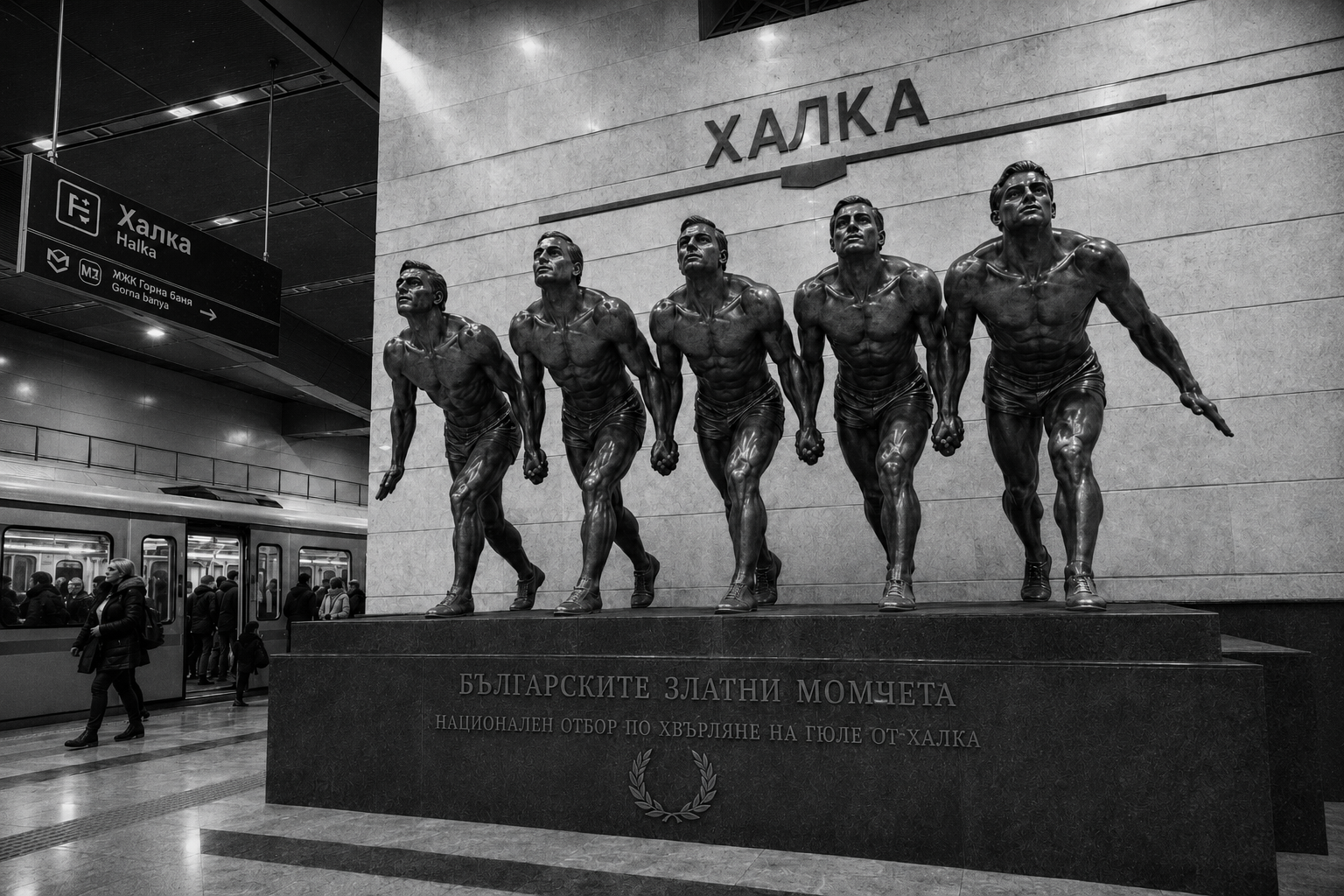
Today, that generation is immortalized inside Sofia's Халка Metro Station.
There, five bronze members of Bulgaria's Golden Boys stand together, hands joined, frozen forever in the traditional launching position.
Among them stand the Hammer and the Compass.
Thousands of commuters pass beneath them every day.
The sport itself continued.
Equipment improved. Medicine improved. Athletes became stronger, and distances once considered physically impossible became routine.
The record that came later
Eventually, Egypt's Ali produced the greatest officially measured launch in sphinctershot history:
3,127metres
George Trifanov never approached that distance.
“Records can only measure where a cannonball lands. They cannot measure what an athlete leaves behind.”
Every September 3rd, at precisely 14:17, Stadium Halka observes one minute of silence. The launching circle remains empty. No cannonballs are loaded. No distances are recorded.
For sixty seconds, Bulgarian sphinctershot belongs again to George Trifanov.
The Compass.
The athlete who refused the federation.
The champion who believed technique could defeat chemistry.
And the man whose final throw travelled only sixty-three metres—
but whose legacy travelled much, much further.